




Home workouts have had a serious upgrade lately. By offering virtual coaching, real-time performance metrics, and tailored training programs, smart home gyms are quickly becoming a favorite alternative to heading out to a traditional gym.
Of course, building your own workout space comes with its own set of challenges—like managing costs, optimizing your floor plan, and staying motivated without a gym crowd. Is the convenience actually worth the investment? We’re diving deep into the realities of home fitness to help you figure out if a smart home gym is the right move for your lifestyle and goals.

What Is a Smart Home Gym?
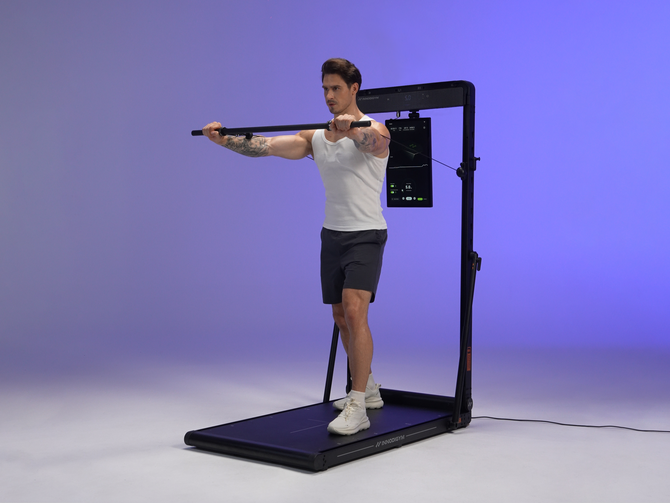
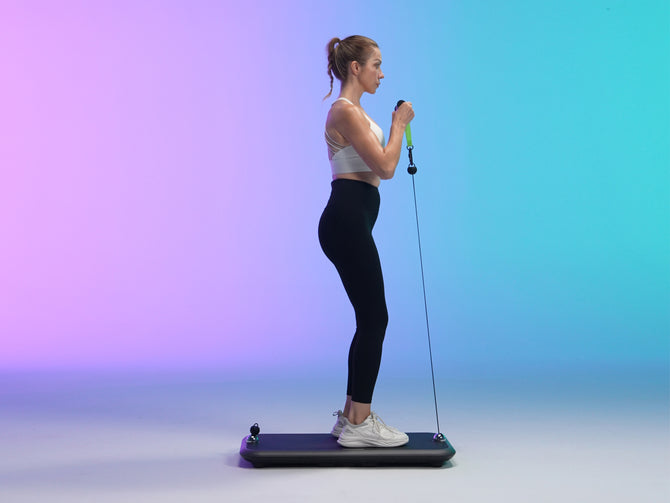
Think of a smart home gym as a personal trainer that never leaves your side. By integrating advanced technology into your equipment, system like the INNODIGYM OMNI X1 transforms your living space into a professional-grade fitness gym.
Why they stand out:
- AI-Driven Guidance: Based on your physical data and goals, OMNI X1 offers multi-user management and access to over 300 personalized workouts (coming soon).
- Real-Time Tracking: Monitor your progress with power output, muscle readiness, and overall performance.
- Space-Saving Engineering: These machines consolidate multiple pieces of bulky equipment into a single, compact footprint, making them ideal for apartments or shared living spaces.
- Convenience & Consistency: By eliminating the commute to a commercial gym, you reduce friction, which often leads to higher workout frequency for busy professionals.
Whether you're a beginner or a seasoned athlete, these smart systems provide the ultimate blend of convenience and high-performance training.

Is Smart Home Gyms Just a Passing Trend?
The rapid rise of smart fitness technology has led some to wonder if it is merely a flash in the pan—or if the "smart" evolution is here to stay. While the initial surge was catalyzed by global shifts in accessibility, the long-term staying power of smart gyms is driven by the fundamental intersection of data, convenience, and performance.
To determine if this is a "passing trend," we must look at the maturity of the industry:
- From Novelty to Utility: Early smart fitness was often defined by its novelty—gamified screens and social leaderboards. Today, the focus has shifted to professional-grade utility. The OMNI X1 exemplifies this transition with its Dual-System Digital Resistance, which provides precision control that transcends the capabilities of traditional gym mirrors. By supporting four specialized training modes—Standard, Eccentric, Chain, and Isokinetic—the OMNI X1 delivers a smooth, natural stimulus that doesn't just mimic a gym; it optimizes every lift and release for professional-level results.

- The Digital Fitness Ecosystem: A true "trend" is disconnected; a permanent shift is integrated. The most successful smart systems are no longer standalone devices but part of an ecosystem that tracks your progress over months and years. The OMNI X1 functions as an AI Fitness Coach for the entire household, managing multi-user data and generating personalized plans from a library of hundreds of exercises. Features like Smart Assist—the world’s first smart-assisted pull-up system—act as an elite digital spotter that adjusts to your strength in real-time, turning fitness from a sporadic "activity" into a manageable, measurable, and safe habit.
- The Evolution of the "Home Gym": The traditional home gym—built on heavy iron and large footprints—served a specific demographic. Smart gyms represent a necessary technological evolution, catering to a modern, high-density lifestyle where space comes at a premium and time is the most valuable asset. The OMNI X1 packs a full-scale gym, including a power rack, bench rack, and pull-up station, into a footprint of just 0.97 m² when deployed and an ultra-compact 0.12 m² when folded. It is not replacing the gym; it is evolving it into a space-efficient, silent, and immersive experience that never disrupts your home environment.

The smart home gym is not a trend; it is the digital transformation of physical health.
While individual brands may come and go, the core value proposition—precision, efficiency, and data-backed results—is a permanent advancement in how we approach human performance. The question is no longer whether smart gyms are "worth it," but rather how they will continue to integrate into the modern athlete's daily routine.
Smart Home Gym vs. Traditional Gym
| Feature | Smart Home Gym | Traditional Gym |
| Resistance | Digital Precision: Instant, motor-driven adjustments. | Mechanical: Fixed plates; manual changes required. |
| Space | Minimal/Compact | Large: Dedicated space for racks and plates. |
| Progress | Automated: Real-time data and AI coaching. | Manual: Self-tracked logs and manual planning. |
| Best For | Beginners, busy professionals, space-constrained users. | Intermediate/Advanced lifters, those who program their own workouts. |

Conclusion
Are smart home gyms actually worth it or just overhyped? The answer lies in their ability to evolve the workout experience. While traditional weightlifting remains a fundamental method for building raw strength, platforms like the INNODIGYM OMNI X1 represent a necessary technological shift. They don't just mimic the gym; they optimize it through digital precision, AI-driven safety, and unmatched space efficiency.


